
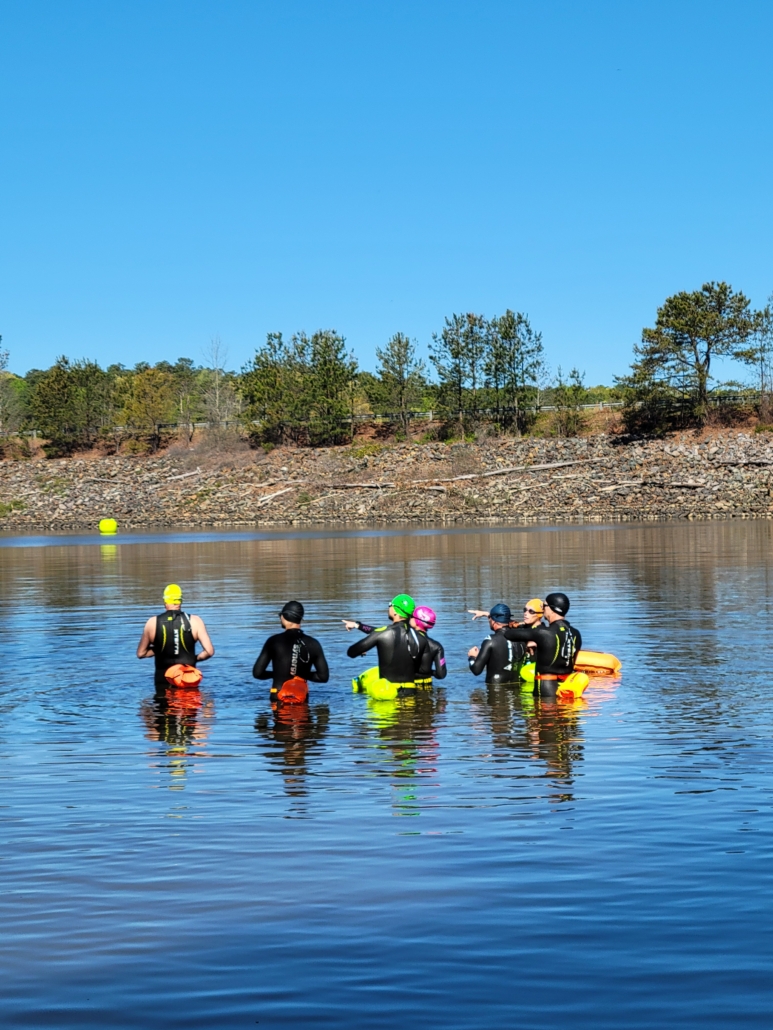
Open Water Swimming for Beginners: How to Overcome the Fear
If the swim is the part of triathlon that keeps you up at night, you are in good company.
Maybe you’re solid in the pool, but the thought of murky water, no black line, and a crowd of splashing arms makes your chest tight. Maybe you had a scary moment in the water years ago. Or maybe you’d love to try a triathlon, but the swim feels like the thing standing between you and the start line.
Here’s what I want you to hear:
Open water confidence is built, not born.
On this episode of the Find Your Edge Podcast, I welcomed back my friend Hilary Topper. Hilary is a USA Triathlon coach, USMS swim coach, open water swim coach, and author of the brand new book Unlocking the Open Water Swim: The Beginner’s Guide to Success in Open Water Events.
And her story is a powerful reminder of how much progress is possible when you start small and keep showing up.
Hilary first joined me on the podcast to talk about her previous book, Unlocking the Triathlon: The Beginner’s Guide to Competing in a Triathlon. If you’re newer to the sport, you can listen to that conversation here.
From “just get me to the wall” to 8.2 miles
Hilary didn’t start swimming until she was 53.
Her first coach told her to hop in the pool and swim 1,600 yards.
She couldn’t make it 25.
In her first masters class, she was choking on water and couldn’t get across the pool. The lifeguard jumped in and said, “Let’s blow bubbles.”
About ten years later, she swam 8.2 miles around Mackinac Island in Michigan.
Not because she’s a natural.
Because she kept showing up, one small step at a time.
Why open water feels so scary (and why that’s normal)
I’d argue fear of the open water is one of the biggest reasons people never try triathlon.
People panic. Some never had access to water growing up. Some had a frightening experience as a kid.
Hilary shared the story of Melissa, a swimmer in her open water group. Years earlier, Melissa had a panic attack while diving on vacation and stopped going in the water.
In Hilary’s group, she started slowly, staying behind the ropes and just getting used to the water. By the end of the session, she swam a full mile…and she was fast!
When adults feel terrified in the water, it’s a vulnerable place to be. That feeling is real.
It’s also something you can work through with patience and the right support.
How to overcome fear of open water swimming
Hilary’s book has whole chapters on the mental side of swimming. A few of her go-to strategies:
- Visualize it first. Before you ever get in the water, picture yourself swimming calmly. Even lying in bed counts.
- Start slow. Once you’re in, take your time. Look around. Notice the water, the sky, the shoreline.
- Build in steps. Stay where you can stand, then go a little farther each time.
- Practice pool skills that transfer. Sighting, breathing and drills that mimic open water conditions can help you feel more prepared.
And about those “creepy crawlies”?
Yes, there are fish in the water. No, they don’t want anything to do with you.
And no, there are no alligators in the lakes here in central North Carolina!
Your first open water swim: keep it simple
If you’re new to open water, your first swim doesn’t need to be long or even feel much like a workout.
Start somewhere protected with other swimmers and support nearby. Give yourself time to get comfortable in the water before worrying about distance or pace.
Your first few sessions might look like:
- Get in and acclimate to the water.
- Practice putting your face in and breathing calmly.
- Swim short distances where you feel safe.
- Practice looking up to sight while swimming.
- Gradually increase how far you swim as your confidence grows.
Remember Hilary’s story: she went from struggling to swim 25 yards to eventually swimming 8.2 miles around Mackinac Island.
You don’t need to conquer the open water on day one.
You just need to take the next step.
What should you practice in the pool before swimming in open water?
You don’t have to wait until you get to the lake or ocean to work on open water skills.
Use your pool sessions to practice sighting, breathing comfortably and adjusting your stroke. The more familiar those skills become in a controlled environment, the less you’ll have to think about when you get outside.
The pool builds your swimming skills.
The open water builds your open water confidence.
Open water safety tips every beginner should know
- Never swim alone. Go with friends, or have a kayaker or paddleboarder with you.
- Be visible. Wear a bright swim cap and use a tow buoy so boats and other people can see you. Hilary’s tow buoy is a giant duck that carries her hydration!
- Know your limits. If you’re exhausted or something feels off, get out. That’s a smart decision, not a failure.
- Acclimate to cold water. Take time to adjust to the water temperature before you start swimming.
- Know when to stop. We also talked about swimming-induced pulmonary edema (SIPE), a potentially serious condition swimmers should be aware of. If you’re coughing, choking, feeling unusually congested, or coughing up pink froth, stop immediately and get medical help.
As athletes, we’re used to pushing through discomfort.
This is not one of those times.
As a lifeguard, if someone ends up on my board with those symptoms, they are done for the day.
Wetsuits, buoyancy shorts and open water swim gear
Wetsuits come in a lot of styles: shorty, sleeveless and full sleeve.
You can add booties, gloves and a thermal cap for colder or rockier swims.
My personal favorite is my shorty…but I live in the South!
If you tend to sink in the pool, buoyancy shorts made from wetsuit material can help lift your hips and provide additional buoyancy.
Why am I slower in open water than in the pool?
If your open water pace is way slower than your pool pace, you’re not alone.
Current, water temperature, sighting and how you adjust your stroke can all play a part.
Hilary talks about experiencing this herself. She might average around 1:50 per 100 in the pool but see something closer to 2:15 or 2:30 in open water.
So don’t automatically assume something is wrong with your fitness or swimming.
The environments aren’t the same.
A DNF doesn’t define you
Hilary and I also talked about the courage it takes to sign up and show up.
Sometimes a DNF is part of the path.
It doesn’t make you any less of an athlete…or any less of a person.
Hilary shared that she once thought a DNF was one of the worst things that could happen. Then she experienced one herself.
And guess what?
She was okay.
There’s a lot to be proud of simply in having the courage to sign up, prepare and show up.
A whole new world of swimming
Once you’re comfortable in the open water, triathlon is just the beginning.
Adventure swims, swimrun, aquabike and even “swimcations” open up.
Hilary has loved events like Swim to the Moon in Michigan, and her book includes information about how to find open water events near you and farther away.
That’s one of the things I love about endurance sports.
You start with one challenge, and suddenly a whole new world opens up.
Open Water Swimming for Beginners: FAQs
Is it normal to be scared of open water swimming?
Yes. Hilary and I talk about how common open water fear can be, especially for athletes who didn’t grow up swimming or who have had a frightening experience in the water.
You don’t have to force yourself to immediately feel comfortable. Start gradually and build confidence one step at a time.
How do beginners start open water swimming?
Start in a protected area with support, take time to acclimate to the water, swim short distances and gradually build from there.
Most importantly, don’t swim alone.
Should beginner open water swimmers use a tow buoy?
A brightly colored tow buoy can help make you more visible in the water. Hilary also recommends wearing a bright swim cap and swimming with other people or support nearby.
Do I need a wetsuit for open water swimming?
Not always. Water temperature, event rules, your comfort and the conditions all matter.
Wetsuits come in several styles, including shorty, sleeveless and full-sleeve options.
Why am I slower in open water than in the pool?
Current, water temperature, sighting and changes to your stroke can all affect open water pace.
While some swimmers may be faster outside, many athletes find their open water pace is slower than their pool pace.
Want support getting ready for your first or next triathlon?
You don’t have to figure out the swim, bike, run and everything in between on your own.
Our coaches build your training around your experience, your goals and your life so you can stop guessing and show up to the start line prepared and confident.
Explore Triathlon & Run Coaching →
You are capable of more than you think. Let’s go find your edge!
This post is for education and isn’t medical advice. If you have health concerns about swimming, talk with your healthcare provider.