
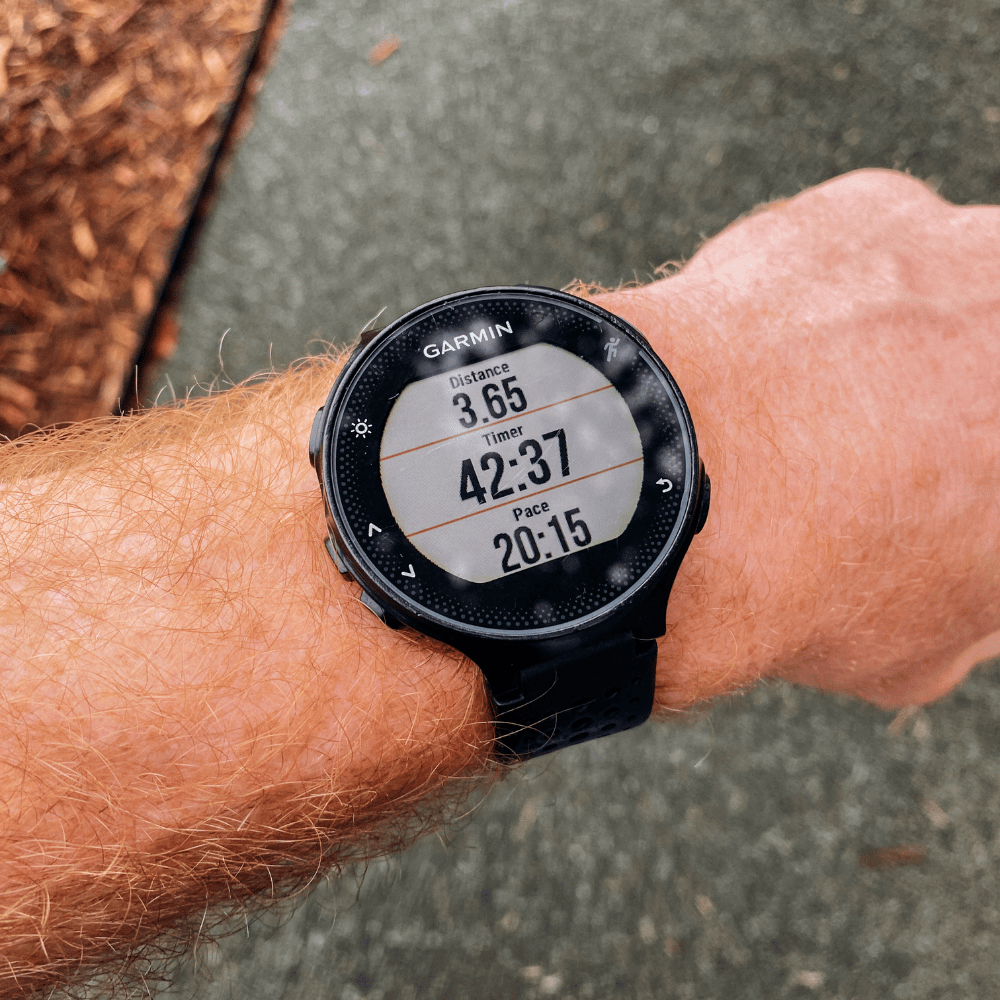
Is Your Garmin VO2 Max Accurate
If you’ve ever looked at your Garmin, Apple Watch, or other wearable and wondered, “Is this VO2 max number actually correct?”—you’re not alone.
In this episode of the Find Your Edge podcast, Coach Chris Newport breaks down what VO2 actually means, how wearable devices estimate VO2 max, why those predictions are only rough estimates, and why lab testing still matters if you want a more accurate picture of your fitness.
What Is VO2?
VO2 stands for volume of oxygen—the amount of oxygen your body needs and uses to do work. That applies whether you are:
- resting
- walking
- running
- cycling
- sleeping
- sprinting
Chris explains that even at rest, your body has a metabolic oxygen demand. As exercise intensity rises, the amount of oxygen you need rises too.
What Is VO2 Max?
VO2 max is your maximum amount of oxygen that you can take in and use for work. It is often used as a measure of cardiovascular fitness and is one of the best-known markers associated with longevity and endurance capacity.
That’s why people pay so much attention to the VO2 max numbers on their watches. But here’s the catch:
Your watch is estimating, not directly measuring.
How Wearables Estimate VO2 Max
Wearables do not measure your oxygen consumption directly. Instead, they estimate it based on your activity data and performance patterns.
As Chris explains, devices are essentially trying to interpret how much work you are doing and what that likely means about your fitness. That can include pace, speed, heart rate patterns, and performance trends.
For example, if you run at a certain pace, there is a predicted oxygen cost associated with that pace. Your device uses that kind of information to estimate what your VO2 max might be.
VO2 Prediction Example: Pace and Oxygen Cost
Chris gives a clear example from the lab and VO2 calculator:
- Running at 6 miles per hour (a 10-minute mile) at 0% grade has an estimated VO2 demand of 35.7
- Running at 10 miles per hour (a 6-minute mile) at 0% grade has an estimated VO2 demand of 57.1
These estimates can be useful for understanding the metabolic cost of different intensities—but they are still predictions, not a direct measurement of what your body is actually using.
Copy of VO2Max Calculator for Walking, Running, and Cycling by CoachChris_RD
Why Wearable VO2 Max Estimates Can Be Off
The same pace does not always mean the same actual oxygen use for every athlete.
Two people running the same speed may have different actual oxygen demands depending on factors like:
- running economy
- fitness level
- body size
- movement efficiency
- sport background
Chris notes that in the lab, an athlete’s predicted VO2 max might be 67, but their actual measured VO2 max could be 60 or 62. That difference matters if you want a more precise understanding of training zones, performance, and fitness changes.
Why Lab Testing Matters
With a lab-based VO2 max test, the athlete wears a metabolic mask so oxygen use can be measured directly—not guessed. This allows testers to see what your body is really doing at different workloads.
That matters for:
- more accurate VO2 max values
- better protocol design during testing
- more useful training zone information
- understanding how your fitness changes over time
Chris also explains that predicted values help lab staff choose the right testing protocol so the athlete is challenged appropriately without being overly fatigued too early in the test.
VO2 Max Can Vary by Sport
This is especially important for triathletes and multi-sport athletes:
Your VO2 max prediction may differ between running and cycling.
Chris emphasizes that this is totally normal. It may reflect differences in sport-specific fitness and can even highlight an opportunity to improve one sport more than another.
Should You Trust the Number on Your Watch?
The short answer: don’t give it too much power.
Chris is very clear that athletes should not over-attach to a wearable VO2 max estimate. If the number goes up or down a little, that does not mean your overall fitness suddenly changed in a dramatic way.
In fact, she mentions that some athletes feel discouraged when their watch shows a lower VO2 max estimate—and her advice is refreshingly direct: if it is messing with your head, turn that feature off.
What Actually Improves VO2 Max?
According to Chris, it is not the device prediction that matters most—it is your training.
Improving VO2 max and performance depends on supportive habits like:
- appropriate training
- good strength training
- better movement economy
- good nutrition
- supporting recovery
Just as important, athletes can also improve economy—using less oxygen at a given pace or workload. That can make you more efficient even if your raw VO2 max number does not change dramatically.
Why VO2 Max Still Matters for Longevity
Chris points out that VO2 max is one of the strongest markers of longevity, which is why it can be helpful to track over time. She likens annual VO2 testing to getting a physical: not something to obsess over daily, but a useful snapshot of where you are and how your body is adapting.

Final Takeaway
Your watch can give you a rough estimate of VO2 max, but it is still only that—an estimate.
If you want a more accurate understanding of your fitness, lab testing provides much better information. But whether you test in a lab or glance at your watch, the bigger point is this:
Focus more on training well than on obsessing over one number.
VO2 max matters. Economy matters. Consistency matters most.