
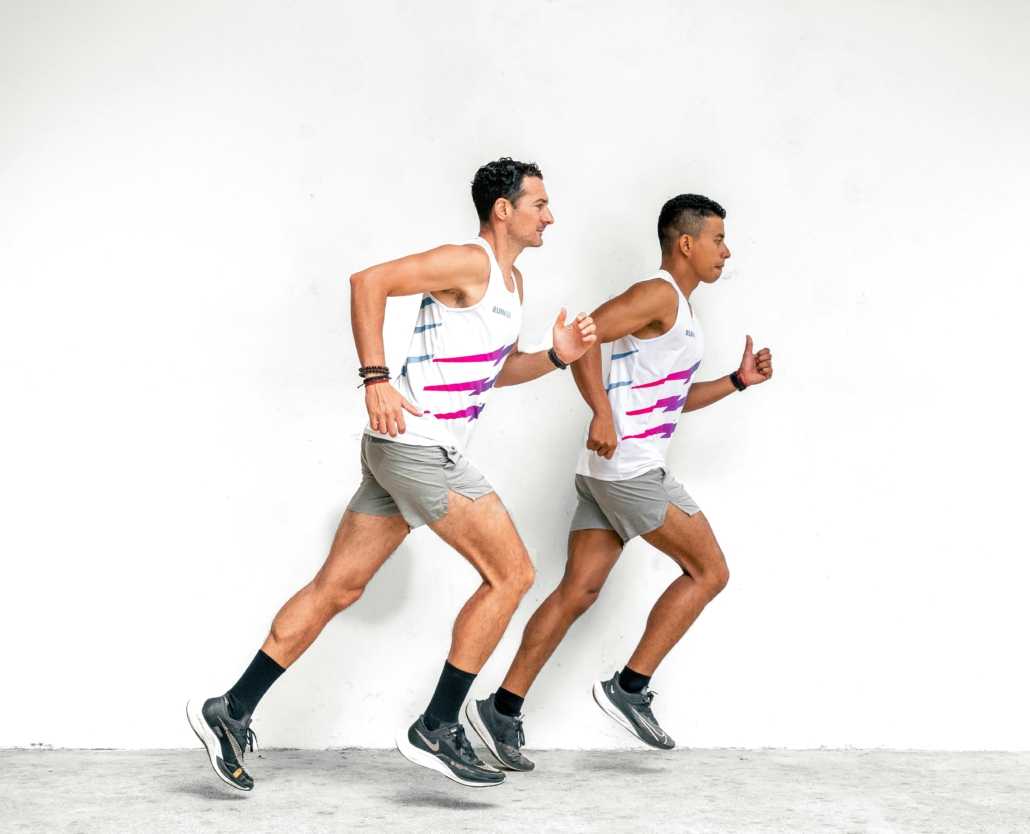
Physical Therapy for Runners: Why Running Form, Biomechanics, and Durability Matter
Most runners assume that if they simply run more, they will become better runners. While consistent training matters, running is also a skill. Your form, strength, muscle activation, and movement patterns all influence whether you stay healthy enough to keep training.
On this episode of the Find Your Edge podcast, Coach Chris Newport sat down with physical therapist Dr. Rick Pitman to talk about running biomechanics, injury prevention, 3D gait analysis, and what truly makes runners more durable.
If you’ve ever dealt with recurring knee pain, shin splints, hip pain, Achilles issues, or simply feel like your running “falls apart” when you get tired, this episode is for you.
Why Most Running Injuries Are Not Just About “Doing Too Much”
Many runners assume that an overuse injury simply means they trained too much. But according to Dr. Pitman, that is only part of the picture.
If your body is not absorbing force well, if you are not using the right muscles at the right time, or if your running mechanics place extra stress on your joints, your body may break down long before your cardiovascular system does.
“If you don’t have good running form or you’re not managing the forces that you’re pushing through the ground, your joints are going to wear out faster.”
Think of your cartilage like the tread on a tire. If you improve your running mechanics and distribute forces more efficiently, you can get much more mileage out of your body.
What Does “Durability” Mean for Runners?
Durability means being able to continue training consistently without getting sidelined by injury.
Performance and durability are not separate goals. They are connected. If you are injured, you are not performing.
Many runners focus only on getting faster or setting a PR. But if you miss six to eight weeks of training because of an overuse injury, your progress can stall quickly.
A durable runner is someone who:
- Can tolerate training load consistently
- Moves efficiently and absorbs force well
- Uses the right muscles at the right time
- Has enough strength to support their joints
- Can maintain good form as fatigue sets in
Running Is a Skill—Not Just Exercise
Most people are never taught how to run. They simply develop their own movement pattern over time.
Dr. Pitman explained that running is a self-selected motor pattern. That means many runners unknowingly develop habits that may work for years, but eventually contribute to pain or inefficiency.
Just because you can run does not mean you are running optimally.
There is skill involved in:
- How your foot strikes the ground
- How your hips and knees absorb force
- How your pelvis rotates
- How much your arms swing
- Which muscles are doing the work
And just like any other skill, these things can be improved.
Why Form Alone Is Not the Whole Story
There is no single “perfect” running form.
Elite athletes often have movement patterns that look very different from one another. Your body proportions, strength, flexibility, injury history, and training background all matter.
Dr. Pitman emphasized that movement should be evaluated in the context of your individual profile.
You might look “fine” on video, but still not be using the right muscles. Or you might have an unusual-looking running style that works perfectly well for your body.
That is why movement testing should go deeper than simply looking at how someone runs.
What Is a 3D Running Gait Analysis?
A traditional running gait analysis often involves taking slow-motion video from the side or front of a treadmill.
While that can be helpful, Dr. Pitman uses a much more advanced 3D gait analysis system that measures how the entire body moves in all three planes of motion.
This includes:
- Hip and pelvic rotation
- Knee and ankle mechanics
- Ground force management
- Foot strike and cadence
- Shock absorption
- Movement changes as fatigue builds
One of the most important things 3D gait analysis can reveal is what happens in the transverse plane—the rotational movements that are often missed with standard video.
For example, how your pelvis rotates or how your hips move may significantly impact stress on your knees, back, or Achilles tendon.
Looking Beyond Form: EMG and Muscle Activation
One of the most fascinating parts of the discussion was that body position is not everything.
Two runners can look nearly identical on video, but their bodies may be using completely different muscles to create that movement.
Dr. Pitman uses EMG (electromyography) to measure which muscles are turning on and when during the running stride.
This helps answer questions like:
- Are your glutes activating properly?
- Are your calves overworking?
- Are you using your quads instead of your hips?
- Are you losing muscle activation when you get tired?
For many runners, the issue is not that they are weak overall—it is that the wrong muscles are doing the work.
How Fatigue Changes Running Form
Many runners feel like their lungs are the limiting factor. But sometimes your cardiovascular system is not what is holding you back.
Instead, fatigue may show up first in your muscles and mechanics.
As you get tired, you may:
- Stop bending through your knee enough
- Lose hip extension
- Absorb less shock
- Start shuffling
- Change how you land or push off
Dr. Pitman uses pressure insoles, force plates, and movement analysis to see exactly when and how a runner’s mechanics begin to fall apart.
Sometimes the first sign of fatigue is not that you are out of breath. It may be that your body is no longer moving efficiently.
Why Strength Training Matters for Runners
One of the strongest takeaways from the podcast was simple:
Runners need to strength train.
Strength is essential for:
- Joint stability
- Better shock absorption
- Improved power and running economy
- Maintaining form late in a race
- Reducing overuse injuries
Many runners worry that lifting weights will make them bulky or slow. In reality, stronger runners are often more efficient and more resilient.
Dr. Pitman described his approach as “Build, Perform, Recover.”
- Build: Improve strength and durability
- Perform: Improve movement and muscle activation
- Recover: Manage fatigue and support healing
When Should a Runner See a Physical Therapist?
You do not need to wait until you are injured.
In fact, the best time to see a physical therapist may be before you have a problem.
Consider an evaluation if you:
- Have recurring injuries
- Always get pain in the same place
- Feel like your form falls apart when you get tired
- Want to improve your running efficiency
- Are preparing for a marathon, half marathon, triathlon, or Ironman
- Want to prevent injury before training ramps up
The Bottom Line
Running more is not always the answer. Running better is.
If you want to stay healthy, train consistently, and perform at your best, it is worth paying attention to how your body moves—not just how far or how fast you go.
Biomechanics, strength, durability, and movement quality all matter. And the earlier you address them, the better your chances of staying healthy and reaching your goals.
Listen to the full Find Your Edge podcast episode with Coach Chris Newport and Dr. Rick Pitman to learn more about running form, injury prevention, and what it really takes to become a more durable runner.
For Rick Pitman, go here https://anthrokinetics.com/
For Chris Newport, go here https://www.theenduranceedge.com/about-us/