
The Science of Lasting Motivation in Endurance Sports with Dr. Sarah Gordon
What helps an endurance athlete keep training not just for one race season, but for years or even decades?
It may not be willpower.
It may not be the medal, podium, pace, power number, or finish time either.
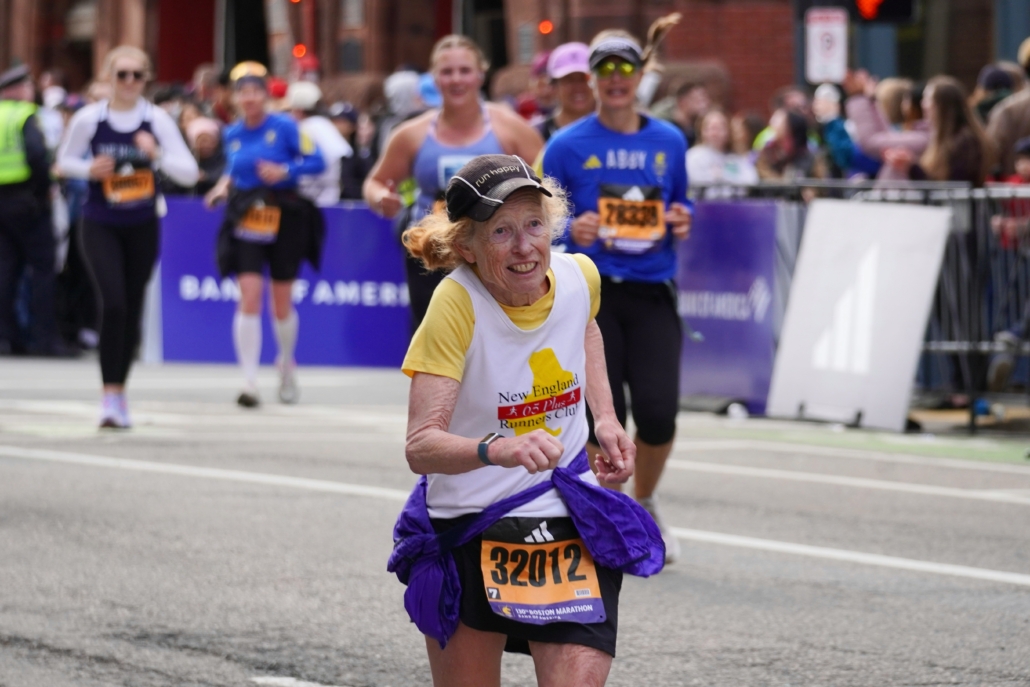
According to Dr. Sarah Gordon’s research with triathletes age 65 and older, lasting motivation in endurance sports is often connected to something deeper: enjoyment, competence, autonomy, health, and community.
In this episode of the Find Your Edge Podcast, Coach Chris Newport talks with Dr. Gordon about the science of motivation, her journey from recreational runner and triathlete to earning a doctorate in health leadership and human performance at age 53, and what older athletes can teach us about remaining active for life.
They explore self-determination theory, successful aging, athletic identity, stress management, adaptability, and why the journey toward a meaningful goal may change us more than the achievement itself.
Lasting Motivation in Endurance Sports: The Key Takeaways
- Motivation is highly individual and can change throughout life.
- Enjoyment may support long-term participation better than external rewards alone.
- Autonomy helps athletes choose goals that genuinely matter to them.
- Competence builds confidence through learning and experience.
- Community creates connection, encouragement, and belonging.
- Successful aging requires adaptability rather than comparison.
- Rest, boundaries, and stress management are part of sustainable performance.
From a First Run to a Doctorate in Human Performance
Dr. Gordon remembers going for her first run at age 15 and immediately falling in love with the feeling of moving outside.
In her twenties, she completed her first triathlon on a heavy Schwinn bike. Her endurance journey continued through different seasons of work, education, and raising a family, even when consistency occasionally slipped.
Then, at age 53, she decided to pursue something she had wanted for years: a doctorate focused on health and human performance.
She completed her doctorate in May 2025 after studying the exercise motivations of triathletes age 65 and older and their perspectives on successful aging.
It was not simply an academic achievement. It helped her create a life that felt more aligned with her curiosity, interests, and sense of purpose.
“It totally shifted my life toward so much more alignment.”
What Does the Science Tell Us About Endurance Sports Motivation?
Endurance sports motivation is the combination of internal and external reasons that influence an athlete to begin, continue, or return to training.
Some athletes may initially be motivated by a race, weight goal, award, or personal record. Those goals can be exciting and meaningful.
But the reasons that help someone remain active over many years often become more personal:
- Enjoying movement
- Feeling capable
- Challenging themselves
- Supporting physical and mental health
- Connecting with other athletes
- Maintaining independence
- Living with purpose
Dr. Gordon emphasizes that motivation is dynamic and individualized. What inspires one athlete may not inspire another and what motivates you today may change during another season of life.
Self-Determination Theory: The Science Behind Lasting Motivation
Dr. Gordon studied motivation through a framework known as self-determination theory.
The theory identifies three basic psychological needs that can support more internally driven motivation: autonomy, competence, and relatedness.
1. Autonomy: Choosing the Journey for Yourself
Autonomy means feeling that you have a meaningful choice in your actions.
You are not training only because someone else expects it from you. You are choosing a goal, activity, or lifestyle because it matters to you.
For an endurance athlete, autonomy can look like:
- Choosing a race distance that genuinely excites you
- Adjusting a goal when your life or health changes
- Deciding how sport fits alongside work and family
- Training because you value the experience not because you need to prove something
This is why “just” completing a sprint triathlon, 5K, or shorter event should never be minimized. Your goal does not need to resemble anyone else’s goal to be valuable.
2. Competence: Developing Skills and Confidence
Competence is the feeling that you can learn, improve, and handle the challenge in front of you.
Endurance sports require many skills beyond physical fitness. Athletes learn how to pace, fuel, hydrate, recover, transition, handle equipment, manage setbacks, and make decisions under pressure.
As those skills improve, confidence often grows.
This creates an important cycle:
Learning builds competence. Competence builds confidence. Confidence makes participation more enjoyable.
You do not need to know everything before beginning. You need an environment that allows you to learn safely, ask questions, practice, and recognize your progress.
3. Relatedness: Finding Your People
Relatedness is the need to feel connected to others.
In Dr. Gordon’s research, older triathletes frequently described the importance of camaraderie, friendship, training partners, travel, and seeing people they knew at races.
The triathlon community was not simply a pleasant addition to the sport. It was part of what kept them participating.
Community can provide:
- Encouragement when motivation dips
- People who understand your goals
- Opportunities to learn new skills
- Practical assistance when you need support
- A sense of identity and belonging
- More enjoyment in training and racing
Asking for help can become particularly important as circumstances change. An athlete may need assistance transporting a bike, modifying training, managing an injury, learning technology, or simply getting to an activity.
Needing support does not make someone less capable. It allows them to continue participating in something that gives their life meaning.
Why Enjoyment Matters More Than Willpower
Discipline and consistency are important. Lofty goals usually require both.
But discipline alone may not create a lifelong relationship with physical activity.
Dr. Gordon found that older triathletes often used phrases such as:
- “I do it because I enjoy it.”
- “I do it because it’s fun.”
- “I love the camaraderie.”
- “I enjoy competing against myself.”
Winning can feel rewarding, but it was not necessarily the primary force bringing athletes back to training and future races.
Enjoyment was.
This does not mean every workout will feel fun. It means the larger experience gives you enough satisfaction, connection, challenge, or meaning to remain part of your life.
How the Science of Motivation Applies as Athletes Age
The goal is not to force your current body to perform exactly as it did 10, 20, or 30 years ago.
The goal is to continue becoming the strongest and healthiest version of yourself in your current season.
That requires adaptability.
Stop Competing With a Past Version of Yourself
Past performances can provide useful information, but they can also become an unfair standard.
Your training history, responsibilities, health, recovery capacity, and priorities may have changed.
Dr. Gordon encourages athletes to make peace with those changes rather than assuming that a different pace or distance means they have failed.
You can still challenge yourself without punishing yourself.
Let the Sport Change With You
Remaining active may mean:
- Selecting shorter races
- Adding more recovery
- Adjusting pace expectations
- Training with a group instead of alone
- Exploring a different sport
- Focusing on consistency instead of competition
- Finding new ways to participate after injury or illness
The format may change, but the benefits of movement, connection, confidence, and purpose can remain.
Challenge Age-Based Assumptions
Dr. Gordon also discusses ageism: assumptions that older adults should naturally slow down, become less adventurous, or withdraw from demanding activities.
Older endurance athletes offer a different picture.
They demonstrate that later life can include learning, competition, travel, friendship, physical challenge, and meaningful goals.
Aging does not erase ambition. It may simply change what success looks like.
Burnout Is Information
There were points during Dr. Gordon’s five-year doctoral journey when the demands of school, caregiving, work, and life became overwhelming.
One of her most practical lessons sounds simple:
“When you feel like quitting, take a nap.”
The deeper lesson is that the desire to quit may sometimes be a signal that something is out of balance.
You may need:
- More sleep
- Better recovery
- Additional support
- Clearer boundaries
- Time away from the goal
- A change in expectations
- Help managing stress
Exhaustion can make a meaningful goal feel impossible. Rest can provide enough space to see the situation differently.
Create Non-Negotiable Time for Yourself
During her doctoral work, Dr. Gordon learned to protect what she calls “non-negotiable time.”
This does not have to mean hours away from your responsibilities.
It might be:
- A 15-minute walk
- An early-morning run
- Mobility or strength work
- Prayer or meditation
- Quiet time without a screen
- A workout with supportive friends
The purpose is to create a small, protected space that supports your well-being.
This is not selfish. It may help you return to the rest of your life with more patience, energy, and perspective.
Be Grateful for the Hard
A race, degree, career transition, injury recovery, or major personal goal will rarely unfold without obstacles.
Dr. Gordon encourages people to remain open to what the difficult moments can teach them.
Her original dissertation plan focused on aquatic exercise for people with Alzheimer’s disease. After three years, she learned that the project would not be feasible within the requirements of her program.
She had to pivot.
That unexpected change led her back to her own curiosity about older triathletes and ultimately to research she deeply loved.
Sometimes a pivot is not evidence that the original journey failed.
It may be the step that brings you closer to work, goals, or experiences that fit you better.
The Journey Changes You Before the Finish Line Does
A finish line can be powerful.
But much of the transformation happens before you reach it.
You learn how to keep going when things become uncomfortable. You become more willing to ask for help. You discover what you value, what you can handle, and where you need to grow.
When Dr. Gordon looks back on earning her doctorate, the degree matters but so do the friendships, lessons, challenges, and self-discovery that happened along the way.
The same is true in endurance sports.
The person who arrives at the starting line is already different from the person who first decided to enter.
What Are You Training For?
Dr. Gordon ends her own podcast interviews with one question:
“What are you training for?”
You can answer it literally, figuratively, or metaphorically.
Perhaps you are training for:
- Your first race
- A personal record
- More energy
- Recovery from a difficult season
- Greater confidence
- Independence as you age
- More adventures with your family
- A life that feels more aligned
Your answer does not need to impress anyone else.
It simply needs to matter to you.
How to Build Motivation That Lasts
Start with these questions:
- What kind of movement do I genuinely enjoy?
- What skills would help me feel more confident?
- Who could support me or join me?
- Does my goal fit my current life?
- What would progress look like without comparing myself to someone else?
- What rest, boundaries, or support do I need?
- What am I really training for?
You do not need a perfect plan before taking your next step.
Choose something meaningful. Stay curious. Ask for help. Let yourself adapt. And remember to notice who you are becoming along the way.
Find Community for Your Endurance Journey
Training may be an individual decision, but it does not have to be an isolated experience.
The Endurance Edge Group Training & Club gives runners and triathletes access to supportive training partners, experienced coaches, skill-building opportunities, and a community that understands the journey.
Whether you are preparing for your first event, returning after time away, or looking for people who can help you remain active for years to come, you are welcome here.
Frequently Asked Questions
What motivates endurance athletes to keep training?
Motivation varies by individual, but Dr. Gordon’s research with older triathletes identified recurring themes such as enjoyment, physical health, personal challenge, friendship, camaraderie, and belonging to the triathlon community.
What is self-determination theory in sports?
Self-determination theory is a framework for understanding motivation. Dr. Gordon explains three psychological needs within the framework: autonomy, or having meaningful choice; competence, or developing skills and confidence; and relatedness, or feeling connected to others.
Why is community important for endurance athletes?
Community can provide emotional encouragement, practical help, accountability, shared experiences, and opportunities to learn. It may also make training and racing more enjoyable.
How can athletes remain active as they age?
Athletes can adapt their distances, pace, training structure, recovery, and expectations to their current circumstances. Remaining active does not require reproducing a past version of athletic performance.
Is it normal to lose motivation during training?
Yes. A drop in motivation may reflect fatigue, stress, inadequate recovery, unrealistic expectations, isolation, or a goal that no longer fits. Before abandoning the goal, consider whether you need rest, support, or a thoughtful adjustment.
How do I become more confident as an endurance athlete?
Confidence often develops through competence. Learning practical skills, practicing consistently, receiving useful coaching, and noticing small improvements can help an athlete feel more capable over time.
Do I need to complete long-distance races to call myself an endurance athlete?
No. A sprint triathlon, 5K, local ride, swim event, or personal fitness goal can be meaningful and challenging. Your athletic experience does not become more legitimate simply because the distance increases.
Listen to the Find Your Edge Podcast
Listen to the complete conversation with Dr. Sarah Gordon on the Find Your Edge Podcast.