
Nutrition Strategies That Support Sleep And Mental Health For Endurance Athletes
Sleep is one of the most powerful recovery tools an athlete has—but it is often the first thing sacrificed when life gets busy.
In this episode of the Find Your Edge podcast, Coach Chris Newport talks with dietetic intern Emily Qiu about how sleep and nutrition impact athlete mental health, recovery, inflammation, anxiety, depression, insomnia, and performance.
Why Sleep Matters So Much for Athletes
Most people have heard that adults need around 7–9 hours of sleep per night. But endurance athletes may need closer to 8–10 hours, especially during heavier training blocks.
That may sound like a lot, but sleep is when the body does some of its most important recovery work, including:
- muscle repair
- immune system support
- hormone regulation
- brain recovery
- mental processing and decision-making
Endurance sports are not just physical. They are highly mental. Poor sleep can affect mood, focus, motivation, reaction time, and race-day decision-making.
The Link Between Sleep and Athlete Mental Health
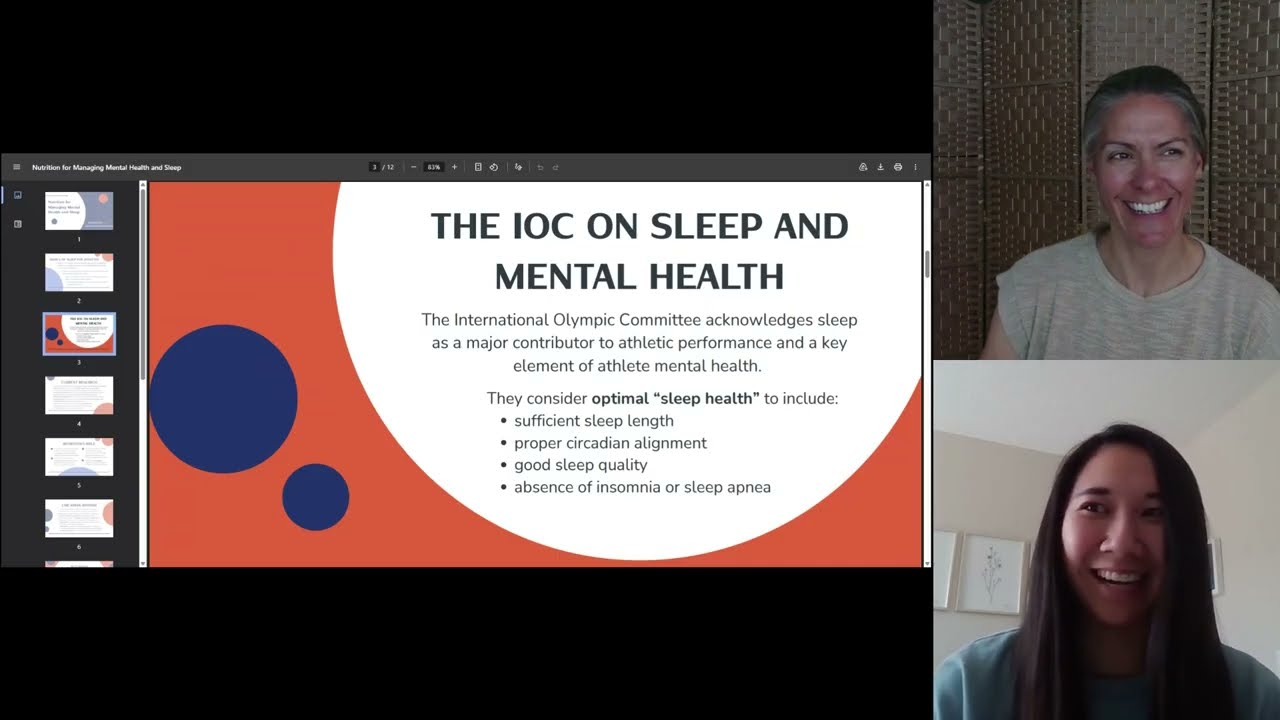
The International Olympic Committee recognizes sleep as a major contributor to athletic performance and athlete mental health.
Optimal sleep includes more than just total hours. It also includes:
- sufficient sleep duration
- a consistent circadian rhythm
- good sleep quality
- minimal sleep disruption
- absence of conditions like insomnia or sleep apnea
Research in athletes shows that poor sleep is common. Many elite athletes report insufficient sleep, poor sleep quality, and insomnia symptoms.
How Poor Sleep Affects Recovery and Inflammation
Inadequate sleep can affect cortisol, the body’s stress hormone, and may increase inflammatory markers such as pro-inflammatory cytokines.
For athletes, this matters because chronic inflammation can interfere with recovery and adaptation.
Training creates stress. That is not bad—your body adapts to stress. But if sleep is poor and recovery is inadequate, that stress can accumulate.
Nutrition Can Support Mental Health—but It Is Not a Replacement for Care
Nutrition can be a powerful support tool for sleep and mental health, but it should not replace medication, therapy, or appropriate medical care when those are needed.
The best approach is often a team approach: nutrition, therapy, medication when appropriate, coaching support, lifestyle habits, and medical care all working together.
The Best Foundational Diet for Mental Health
A nutrient-dense, whole-food-based dietary pattern is one of the best foundations for mental health.
A Mediterranean-style diet is especially helpful because it emphasizes:
- fruits and vegetables
- beans and legumes
- whole grains
- nuts and seeds
- olive oil
- fatty fish
- herbs and spices
These foods provide antioxidants, polyphenols, fiber, omega-3 fats, vitamins, and minerals that support brain health and help reduce oxidative stress.
Why Whole Foods Beat Random Supplement Guessing
Supplements can be useful, but they should not replace a strong food foundation.
Whole foods contain nutrients that work together. For example, berries provide vitamin C, fiber, polyphenols, and other compounds that work synergistically in the body.
High-dose antioxidant supplements are not always better and may even work against adaptation when overused. Food-first is usually the best starting point.
Circadian Rhythm: Your Body’s Sleep-Wake Clock
Your circadian rhythm is your body’s natural 24-hour sleep-wake cycle. It is influenced by light exposure, darkness, cortisol patterns, and melatonin production.
When circadian rhythm is disrupted, sleep can suffer—and so can mood, recovery, and performance.
Nutrients and Supplements That May Support Circadian Rhythm
- Vitamin B12: may support light sensitivity, cortisol rhythm, and melatonin production
- Melatonin: may help signal sleep timing, but low doses are often preferred
- Phosphatidylserine: may help support healthy nighttime cortisol patterns
Melatonin is not always the first place to start. Caffeine timing, light exposure, meal timing, stress, and bedtime routine may need to be addressed first.
Nutrition Support for Insomnia
Insomnia can include trouble falling asleep, staying asleep, or waking too early.
It is associated with depression, PTSD, and may be a risk factor for cognitive decline later in life.
Nutrition tools that may support sleep include:
- Magnesium: supports relaxation and may help lower stress response
- Valerian root, hops, and passionflower: herbal options that may support GABA activity
- Lavender: useful as tea, aromatherapy, or relaxation support
- Lactium: a milk biopeptide that may have calming effects
Magnesium for Athletes
Magnesium is especially relevant for athletes because it is involved in muscle function, nervous system regulation, and may be lost in sweat.
Different forms may serve different purposes:
- Magnesium glycinate: often used for sleep support
- Magnesium threonate: may support brain health and anxiety
- Magnesium citrate: may help with constipation
- Magnesium oxide: inexpensive, but generally less well absorbed
Nutrition Support for Depression
Depression is common in athletes, especially when training stress, pressure to perform, injury, identity, and overtraining come into play.
Nutrients commonly discussed in relation to depression include:
- Vitamin D
- Vitamin B12
- Omega-3 fatty acids
Food sources include fatty fish, eggs, dairy, fortified plant milks, mushrooms, and animal proteins. Vegan and vegetarian athletes should pay special attention to B12 status.
Nutrition Support for Anxiety
Anxiety is also common in athletes, especially performance anxiety.
For some athletes, anxiety may show up physically as nausea, diarrhea, cramping, or GI distress during training or racing.
Potential nutrition support strategies include:
- a Mediterranean-style diet
- prebiotic and probiotic foods
- B-complex vitamins
- chamomile
- passionflower
- strategic caffeine reduction
The Gut-Brain Axis Matters
Your gut and brain are deeply connected.
A healthy gut microbiome may support mood, neurotransmitter production, inflammation regulation, and nervous system balance.
Helpful foods include:
- yogurt
- kefir
- sauerkraut
- kimchi
- beans
- artichokes
- vegetables
- high-fiber whole foods
Start With the Lowest-Hanging Fruit
Before jumping into supplements, start with the basics:
- Move caffeine earlier in the day
- Reduce or eliminate alcohol close to bedtime
- Eat mostly whole foods
- Build a calming nighttime routine
- Manage training load
- Support social connection
- Test key labs instead of guessing
When to Get More Personalized Help
If you are struggling with sleep, anxiety, mood, fatigue, or recovery, it may be time to get support.
At The Endurance Edge, we help athletes and active adults look deeper at nutrition, labs, lifestyle, genetics, and performance goals so they can stop guessing and start feeling better.
If you want quick, personalized guidance, book a 30-minute Quick Start Nutrition Consult.
If you want a deeper, lab-guided approach to long-term energy, metabolism, performance, and health, learn more about the Longevity Lab.