
Aero Secrets for Triathlon: Get Faster Without Working Harder
When it comes to getting faster in triathlon, most athletes think they need to just train harder. But the truth is, there’s often untapped speed hiding in plain sight—through aerodynamics. Coach Chris interviews Coach Jason in his journey to getting faster for triathlon without working harder using aerodynamics.
Analyzing Data to get Faster on the Bike
Back in early 2019, Jason kept noticing a frustrating trend: he was pushing higher power numbers than his competitors, but not going any faster. After digging into the data, he discovered the issue wasn’t his fitness—it was his aerodynamics.
That insight launched a deep dive into aero optimization, and by the end of it, Jason had made himself 60 watts more efficient. That’s a game-changer. He didn’t get stronger—he just got smarter about moving through the air.
Why Aerodynamics Matter (A Lot)
Here’s the reality: at 20 mph, about 80% of your power is spent battling wind resistance. So the more “slippery” you are, the more of that power turns into speed. Jason dropped his drag coefficient (CDA) from 0.3 to 0.24—a massive shift that led to real-world time savings in both half and full Ironman races.
The best part? Many of those changes were cheap or even free.
Start with the Basics: Position Is Everything
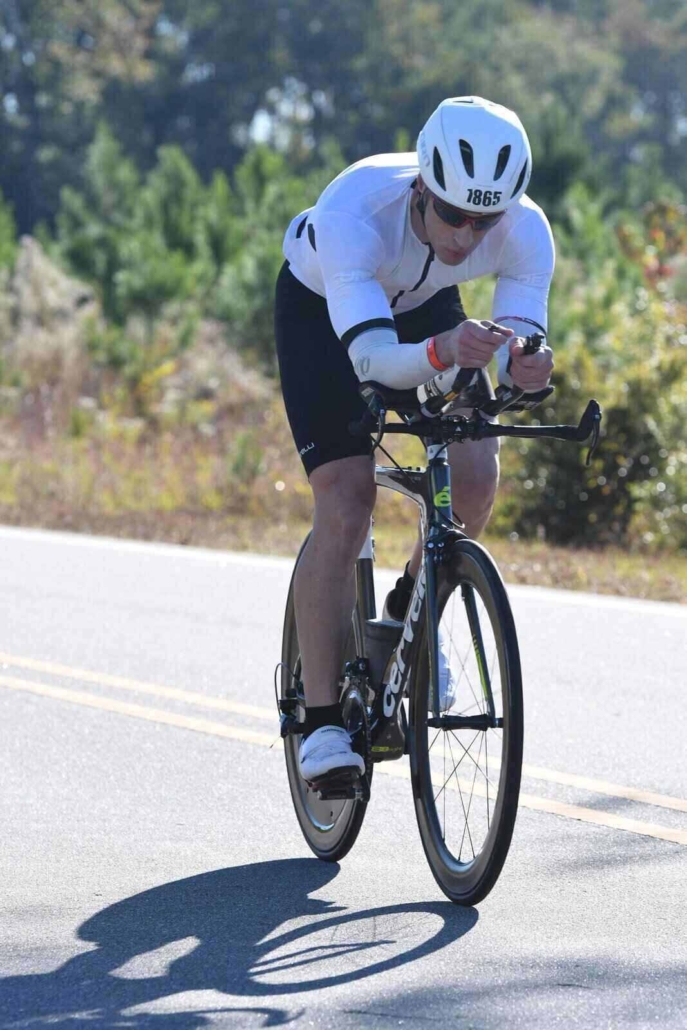
One of Jason’s first (and most effective) upgrades? Clip-on aero bars. For around $50–150, he gained roughly 1 mph at the same power. But getting into that position is just the start—learning to stay there comfortably is the key.
He practiced indoors first, then took it to the road, gradually training his neck, shoulders, and back to stay aero without sacrificing control or comfort.
Dress for Speed, Not Just Style
Jason notes how “if it flaps, it’s slow.” That means ditching loose jerseys in favor of tight-fitting, sleeved race kits. Even shaving arms and legs became part of his routine—because yes, hair creates drag, especially on exposed skin.
It might sound extreme, but small surface area improvements add up when you’re out there for hours.
Hydration That Works and Saves Watts
Aerodynamics and hydration don’t have to compete. Jason added a torpedo bottle between his aero bars, which not only made it easier to drink—but actually improved his aerodynamics by filling the airflow gap between his hands and head.
He paired that with rear-mounted bottles behind his seat—keeping hydration accessible without slowing him down.
Small Tweaks, Big Gains
Some of Jason’s smartest changes were also the cheapest:
- Latex tubes instead of butyl: 2–4 watts saved per tire
- Drivetrain cleaning and lubing: up to 10 watts gained
- Tire pressure optimization: better rolling resistance and comfort
- Affordable rear disc covers: ~$100–150 for most of the benefit of a full disc wheel
Each of these alone might not seem like much—but combined, they added up to serious time savings.
Spend Where It Counts (If You Want To)
Once Jason covered the basics, he explored bigger-ticket items like:
- Deep-section front wheels (60mm+): noticeable speed gains
- Professional aero bike fit: dialing in position for both comfort and speed
These upgrades aren’t necessary to get started, but they can take you to the next level once you’ve dialed in the fundamentals.
Final Takeaway: Take the Free Speed!
Jason’s story is a reminder that you don’t have to get fitter to get faster. By being strategic with position, clothing, equipment, and habits, you can unlock “free speed” and show up on race day feeling confident—not just in your fitness, but in your setup.
Because at the end of the day, it’s not just what you can do on the bike—it’s what you should do to make sure you can run strong off it.
Work with Us
Our 1-on-1 endurance coaching services give you the guidance, accountability, and strategy to train smarter—not harder. Want to learn more? Learn more and apply for limited spots here.