
Iron Deficiency in Endurance Athletes: Signs, Testing & Treatment
You can be training consistently, eating well, sleeping enough and still feel exhausted.
Your pace slows.
Your recovery gets worse.
You struggle to finish workouts that used to feel manageable.
Many athletes assume they simply need to train harder.
But sometimes the real problem isn’t motivation.
It’s iron.
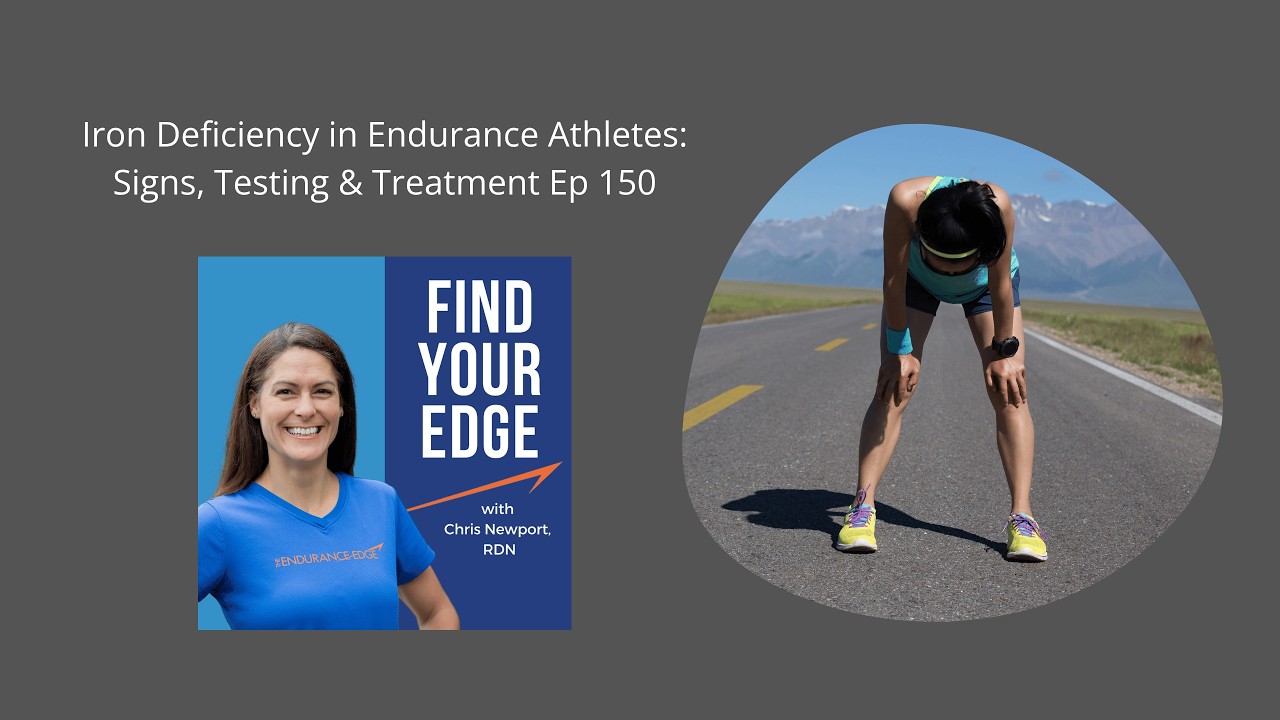
In this episode of the Find Your Edge Podcast, Emily Qiu interviews iron researcher Dr. Cory Dugan alongside Coach Chris Newport to discuss why iron deficiency is one of the most common and most overlooked performance limiters in endurance sports.
Quick Answer
Iron deficiency reduces your body’s ability to transport oxygen, produce energy, and recover from training. Endurance athletes especially female athletes are at increased risk because running, heavy training, menstruation, growth, and inflammation all increase iron needs while reducing absorption.
The solution isn’t to blindly take supplements. It’s to test first, understand your results, and build an individualized plan.
Why Endurance Athletes Lose More Iron
Many athletes don’t realize that simply participating in endurance sports increases iron loss.
According to Dr. Dugan, endurance exercise can reduce iron through several mechanisms:
- Foot strike hemolysis (red blood cell breakdown while running)
- Sweat losses
- Small amounts of gastrointestinal bleeding
- Exercise-induced inflammation
- Reduced iron absorption after long workouts
For women, menstrual blood losses create another major source of iron depletion.
When adolescence, heavy training, and menstruation overlap, iron requirements increase dramatically.
The Hidden Role of Hepcidin
One of the most fascinating parts of this discussion is the hormone hepcidin.
After endurance exercise, inflammation causes hepcidin levels to rise.
When hepcidin increases, your body temporarily blocks iron absorption.
This means timing matters.
If you take an iron supplement immediately after a hard workout, your body may absorb very little of it.
Instead, athletes often benefit from taking iron away from training sessions when absorption is higher.
Signs You May Be Iron Deficient
Iron deficiency doesn’t always look obvious.
Many symptoms mimic hard training:
- Persistent fatigue
- Poor recovery
- Brain fog
- Difficulty concentrating
- Poor sleep
- Restless legs
- Heart palpitations
- Cold intolerance
- Hair loss
- Brittle nails
- Reduced training performance
These symptoms are easy to dismiss as “normal marathon training” or “Ironman fatigue.”
That’s why athletes often stay iron deficient for months before anyone recognizes the problem.
Don’t Rely on Hemoglobin Alone
One of the biggest myths discussed in this episode is that a normal hemoglobin automatically means your iron is fine.
Not true.
Hemoglobin often stays normal until iron stores become severely depleted.
Instead, ask your healthcare provider about an iron panel that includes:
- Ferritin
- Transferrin Saturation
- Total Iron Binding Capacity (TIBC)
- Serum Iron
- Hemoglobin
Looking at the complete picture provides much better insight than a CBC alone.
What Ferritin Level Is Best?
There isn’t universal agreement on an “ideal” ferritin number.
Instead of chasing one magic value, Dr. Dugan recommends monitoring trends over time.
The goal is understanding how your iron status changes throughout the training season—not simply reacting to one blood test.
This individualized approach matches how we coach athletes at The Endurance Edge.
Can You Fix Iron Deficiency With Food?
If iron stores are only mildly reduced, improving dietary intake may be enough.
Excellent iron-rich foods include:
- Lean beef
- Liver
- Dark poultry
- Seafood
- Beans
- Lentils
- Fortified cereals
- Spinach (although absorption is limited)
Once deficiency becomes significant, nutrition alone usually isn’t enough.
That’s when supplementation should be discussed with your healthcare provider.
How to Improve Iron Supplement Absorption
- Take with Vitamin C
- Avoid calcium at the same time
- Avoid coffee and tea around supplementation
- Separate supplements from hard workouts
- Some research suggests every-other-day dosing may improve absorption while reducing GI distress.
Do Cast Iron Pans or Lucky Iron Fish Work?
Probably not enough to correct deficiency.
Although cooking with cast iron can increase the iron content of food, current research shows this usually doesn’t meaningfully improve ferritin levels in athletes who are already deficient.
Should Endurance Athletes Get Tested?
Absolutely.
Rather than waiting until symptoms become severe, endurance athletes—particularly female athletes—should consider periodic screening as part of their long-term performance plan.
The earlier iron deficiency is detected, the easier it is to correct.
Key Takeaways
- Iron deficiency is common among endurance athletes.
- Symptoms often look like overtraining.
- Normal hemoglobin does not rule out iron deficiency.
- Ferritin trends matter more than one isolated number.
- Timing of supplementation affects absorption.
- Testing beats guessing every time.
Frequently Asked Questions
Can male athletes become iron deficient?
Yes. While female athletes are at higher risk, male endurance athletes can also develop iron deficiency due to heavy training loads.
Should I take iron supplements just in case?
No. Iron supplementation should be based on appropriate testing and guidance from your healthcare provider.
Can overtraining mimic iron deficiency?
Yes. Fatigue, poor recovery, and declining performance can occur with both conditions.
Ready to Stop Guessing?
If you’ve been struggling with fatigue, poor recovery, or inconsistent performance, don’t assume it’s simply your training.
Our sports nutrition team helps endurance athletes interpret lab work, optimize fueling, and build individualized nutrition plans based on science—not social media.
Book a Sports Nutrition Consultation with The Endurance Edge and gain confidence in every training decision.
https://www.theenduranceedge.com/sports-nutrition-for-performance-longevity/